Proximity vs Relevance vs Prominence Explained
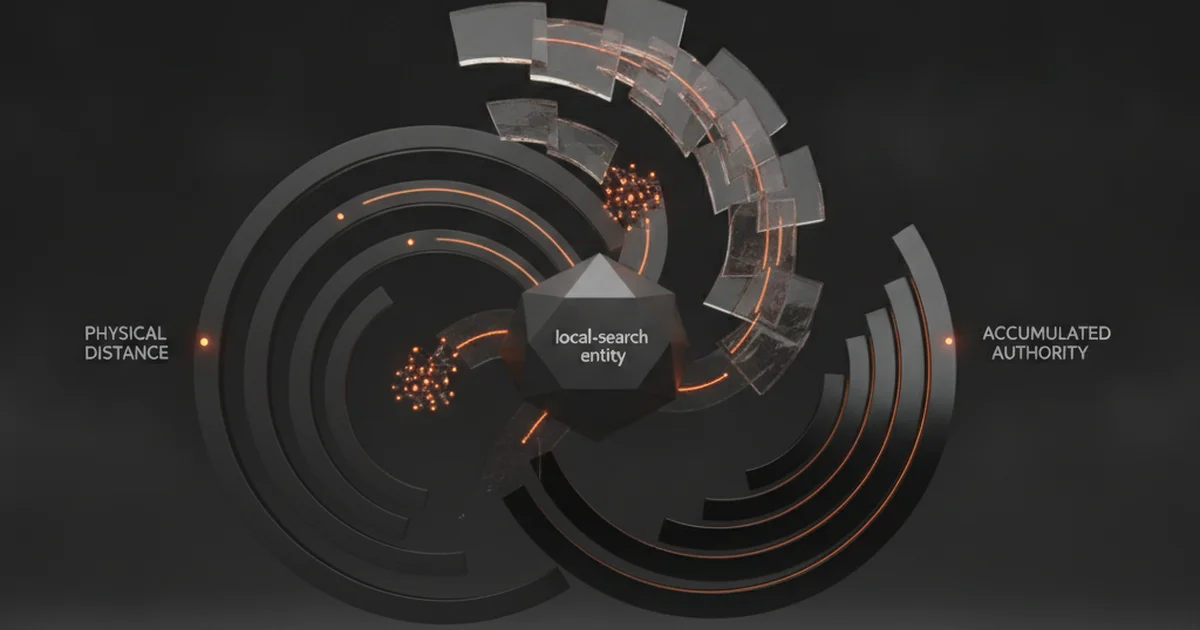
Local search visibility in 2026 is determined by the interaction of three core pillars: proximity, relevance, and prominence.
While proximity is a fixed factor based on the physical distance between the searcher and your business, relevance and prominence are movable signals that you can influence through clear service categorisation and building a strong online reputation. Understanding how these three forces work together is essential for any Scottish service business looking to win more local work.
Why These Three Pillars Matter
When a homeowner in Fife or a business owner in Glasgow searches for a tradesperson, they aren't just looking for any business; they are looking for the right one, right now. Google's job is to act as a digital filter, sorting through hundreds of local options to find the best match.
To do this fairly and accurately, it uses a three-legged stool model. If any one of these legs (proximity, relevance, or prominence) is missing or weak, your business will struggle to appear in those top-tier search results.
At TreeTopFrog, we've seen many businesses get frustrated because they have fifty five-star reviews but still don't show up for a search taking place only two miles away. Conversely, we see businesses that are right around the corner from the customer but lose out to a competitor across town.
This happens because local search is a balancing act. You aren't just competing on one front; you are being measured against these three distinct criteria every single time someone hits "search". Understanding these pillars allows you to stop guessing why you aren't appearing and start focusing on the areas you can actually change.
Proximity: The One You Can't Fully Control
Proximity is the most literal of the three pillars. It is the physical distance between the person holding the phone and your verified business address at the moment of the search.
If someone is standing in the centre of Dunfermline searching for "emergency roofing," Google is naturally going to look for roofers who are closest to that specific spot. This is why you might rank number one when you are sitting in your office, but drop to page two when you drive ten miles away to a job site.
For most service area businesses in Scotland, proximity is a less-movable factor. Unless you move your yard or office, your physical anchor point is fixed. We have seen owners try to "game" this by using fake addresses or PO boxes, but the search engine is incredibly good at spotting these tactics and penalising them.
You have to accept that for very hyper-local searches, the business located just down the street from the customer has a natural "home-field advantage". However, proximity is not the only factor; a business further away can still win the top spot if they are significantly stronger in the other two pillars.
Relevance: The One Most Businesses Get Wrong
Relevance is the measure of how well your business matches what the customer actually typed into the search bar. This is where most Scottish trades lose out. If a customer searches for "wet room installation" but your website and profile only use the broad term "plumber," you are failing the relevance match.
Google needs to see a direct connection between the query and your visible service wording. It isn't going to guess that you do wet rooms; it needs to see the evidence in black and white.
At TreeTopFrog, we often see businesses that have a "flat" digital presence where everything is lumped together. This creates a diluted relevance signal. If your business is categorised too broadly, you become a "jack of all trades, master of none" in the eyes of the search engine.
To be highly relevant, your digital setup needs to reflect the specific language your customers use. If you want to be found for "boiler servicing," you need to ensure that the term is prominent and properly categorised. This is the most "movable" pillar because you have total control over how you describe your work and your expertise.
Prominence: The One That Takes Time to Build
Prominence is essentially your online reputation and authority. It is Google's way of asking, "Is this business a big deal in this local area?" To answer this, the engine looks at your total digital footprint.
This includes your volume of reviews, the quality of those reviews, and how often your business is mentioned on other local websites, news outlets, or trade directories. It is a measure of trust that proves you aren't just a "man with a van" who started yesterday, but an established professional with a track record.
Building prominence is a marathon, not a sprint. You cannot buy a "prominence package" and expect to jump to the top of the results next Tuesday. It requires a consistent effort to gather honest customer feedback and ensure your business name, address, and phone number are consistent across the entire web.
We've seen long-standing Scottish firms with decades of real-world experience lose out to newer competitors simply because the newer business was better at documenting their prominence online. In 2026, your real-world reputation only counts if the search engine can see the digital signals that prove it.
How the Three Work Together
These three pillars do not exist in isolation; it is never as simple as the closest business winning, because closeness, fit, and how solid you look interact in a dynamic tug-of-war. For example, if a customer is searching for a very niche service like "historic stonemasonry," Google might ignore proximity and show a specialist from thirty miles away because their relevance and prominence are so high for that specific search.
The search engine is willing to trade distance for expertise if the match is strong enough.
Conversely, for a very common search like "taxis" or "coffee shop," proximity becomes the dominant force. In these cases, the engine assumes you want the most convenient option, so it prioritises the closest results even if they have fewer reviews.
For the average Scottish trade (an electrician, a cleaner, or a landscaper), you are usually operating in the middle ground. You need enough proximity to be considered, but you win the job by having superior relevance and prominence compared to the person just down the road. It is the combination of being "close enough" and "obviously the best" that secures the lead.
What's Fixed vs What's Movable
Understanding what you can and cannot change is the key to a stress-free digital strategy. Your address is fixed; unless you move premises, you cannot change your proximity.
Spending time worrying about why a competitor who lives next door to a high-value neighbourhood is outranking you in that specific street is a waste of energy. That is a proximity win for them that is very hard to overcome through geography alone.
However, your relevance and prominence are movable. These are the areas where you can actually "outwork" your competition. You can improve your relevance by being much clearer and more specific about the services you offer.
You can improve your prominence by actively gathering more reviews and ensuring your business is mentioned in local Scottish news or community sites. At TreeTopFrog, we believe in focusing your effort on the movable signals. You can't change where your yard is, but you can absolutely change how important and relevant your business looks to the search engine.
In Summary
The secret to local search visibility lies in balancing proximity, relevance, and prominence. While you are tied to your physical location, you have the power to influence how clearly you describe your services and how strongly your reputation shines online.
At TreeTopFrog, we know that when a Scottish service business masters the movable pillars, they stop being at the mercy of their postcode and start winning the jobs they actually want.
Ready to Leapfrog Your Visibility?
Your website should be working as hard as you do. Let's make it happen.